
Few internet creators have changed the scale of online entertainment as dramatically as MrBeast. Born Jimmy Donaldson, he began creating videos as a teenager and gradually developed a distinctive approach based on ambitious challenges, unusual ideas, generous prizes, and highly engaging storytelling. What started as a small YouTube channel eventually became a much larger entertainment operation spanning digital content, television, food products, philanthropy, and other business ventures.
The remarkable part of his story is not simply the size of his audience. His career demonstrates how online creators can turn attention into a broader business ecosystem when they understand what their audience wants and consistently reinvest in content. By 2026, his brand had expanded far beyond traditional YouTube videos, while his main channel had reached the historic milestone of 500 million subscribers according to his company’s own account.
The latest phase of his career also shows how creator-led entertainment continues to evolve. His recent videos have maintained the large-scale challenge format, while his television projects and consumer businesses have given the brand additional ways to reach audiences. This combination of content and entrepreneurship has made his career an important case study for anyone interested in digital media.
Who Is MrBeast?
MrBeast is the online name of Jimmy Donaldson, an American YouTuber, entrepreneur, media personality, and philanthropist. He was born in 1998 and began experimenting with YouTube videos during his early teenage years. His early content was very different from the massive productions associated with his name today. Gaming videos, commentary, and experiments with different types of content helped him learn what attracted viewers and what encouraged them to keep watching.
His breakthrough came after years of persistent experimentation. One of his early viral successes involved counting to 100,000, a simple concept that became compelling because of its unusual commitment and extreme duration. From that point, he increasingly focused on ideas that could be understood immediately from a thumbnail and title but still contained enough suspense to keep viewers watching.
That approach eventually developed into elaborate competitions, endurance challenges, recreations of popular entertainment concepts, and philanthropic projects. Instead of treating each upload as an isolated video, Donaldson developed a recognizable entertainment formula in which the central idea, stakes, visuals, contestants, editing, and final payoff all worked together.
The Early YouTube Journey
The foundation of his success was not created overnight. Donaldson started uploading to YouTube in 2012, initially experimenting with gaming and commentary content. At that stage, there was no guarantee that his channel would become a global entertainment company. His progress came through repeated testing, observation, and an unusual willingness to spend considerable time understanding how YouTube audiences behave.
One of the most important lessons from this period is that successful creators often discover their format through experimentation rather than beginning with a perfect strategy. Donaldson tested different ideas until he found concepts capable of generating curiosity. Once he recognized that extreme challenges and large-scale rewards produced strong audience reactions, he continued refining that approach.
The transformation from ordinary uploads to major productions also required an understanding of packaging. A compelling idea is only useful if viewers notice it. Titles, thumbnails, opening moments, pacing, and storytelling became important parts of the overall production process. This helped turn his videos into events rather than simply another upload appearing in a subscriber’s feed.
What Made His Content Different?
The central strength of MrBeast’s content is its ability to communicate a clear story quickly. A viewer can often understand the basic challenge almost immediately: contestants must survive, complete something difficult, remain in a particular location, compete for a major prize, or achieve an unusual goal. That simplicity makes the concept accessible to a worldwide audience.
However, simplicity on the surface does not mean simplicity behind the scenes. Large productions require planning, crews, locations, safety procedures, contestants, editing teams, visual effects, logistics, and considerable financial resources. His videos therefore demonstrate an important shift in online entertainment: the biggest creators increasingly operate more like production companies than individual influencers.
Another defining characteristic is escalation. After one successful idea, the next production often attempts to introduce a larger prize, more contestants, a more unusual location, or a more ambitious concept. This creates anticipation among viewers because the audience expects the creator to continually find a new way to increase the stakes.
MrBeast and the Power of Reinvestment
One of the most frequently discussed aspects of Donaldson’s business model is reinvestment. Rather than treating YouTube revenue purely as personal income, he has repeatedly described putting significant resources back into production and new ventures. His own company’s account of his career describes a cycle in which sponsorships and audience growth helped fund larger ideas, which then attracted larger audiences.

This approach can be understood as a content-growth loop. Better production can attract more viewers, increased attention can generate stronger commercial opportunities, and those opportunities can provide resources for future productions. When managed successfully, each stage can support the next one.
That strategy also explains why some of his videos appear dramatically more expensive than ordinary creator content. The objective is not necessarily to minimize the production budget. Instead, the goal is to determine whether additional investment can create a substantially more engaging experience and ultimately produce a stronger return through views, sponsorships, brand growth, and other revenue sources.
Major Business Expansion
As his audience grew, Donaldson began building businesses around the attention generated by his media operation. Feastables became one of the most recognizable examples, turning his online brand into a consumer food business. His wider business ecosystem has also included media channels, merchandise, creator-related technology, food ventures, and other projects.
The significance of this expansion is that the audience is no longer limited to watching videos. A viewer can encounter the brand through entertainment, packaged products, streaming programs, charitable campaigns, or other consumer experiences. This creates multiple touchpoints between the creator and the audience.
The broader lesson for digital entrepreneurs is that a powerful audience can become the foundation for a diversified business. However, diversification also introduces new risks. Running a food company, entertainment production, consumer brand, and digital media operation requires different expertise and management systems. The scale of these operations means that creator success increasingly depends on teams rather than one individual.
Key Areas of the MrBeast Business Model
The business ecosystem surrounding the creator can broadly be understood through several connected areas:
- YouTube and digital entertainment
- Consumer products and food brands
- Streaming and reality television
- Philanthropic initiatives
- Creator-focused technology and other businesses
These areas reinforce one another because the central asset is audience attention. A successful video can introduce viewers to another project, while a successful product can strengthen brand recognition and create additional resources for future content.
Beast Games and the Move Into Television
One of the clearest signs of the changing creator economy has been the development of Beast Games. The competition series expanded the creator’s familiar challenge format into a longer-form television production. Its first season became a major Prime Video project, and the second season continued the format in 2026.
The transition from YouTube to streaming is significant because the two formats operate differently. YouTube rewards fast audience engagement, frequent publishing, and strong individual videos, while television and streaming require longer production cycles, broader logistical planning, and more complex storytelling. The success of a creator in one environment does not automatically guarantee success in another.
Beast Games nevertheless demonstrates how an internet personality can carry an established audience into mainstream entertainment. The show’s large prizes, competitive format, and recognizable host preserve many of the characteristics that made the YouTube content popular while introducing a more traditional television structure.
Philanthropy and Social Impact
Philanthropy has remained another major part of the brand. Projects associated with Beast Philanthropy have focused on providing food, medical assistance, infrastructure, and other forms of support. Donaldson has also participated in large collaborative fundraising campaigns involving environmental and humanitarian causes. His company says that more than $90 million has been raised through initiatives associated with Team Trees, Team Seas, and Team Water.
What makes these projects particularly notable is the relationship between entertainment and charitable fundraising. Large audiences can be mobilized quickly when a campaign is presented in a way that is understandable and emotionally engaging. The creator’s reach can therefore become a distribution mechanism for causes that might otherwise struggle to receive widespread attention.
At the same time, large philanthropic projects require careful organization and transparency. As creator-led charity becomes more common, audiences increasingly expect information about where money goes, how projects are managed, and what outcomes are achieved. The growth of this model makes responsible execution just as important as publicity.
Why His Strategy Works With Modern Audiences
The modern internet audience has enormous choice. Thousands of videos, short-form clips, livestreams, podcasts, games, and streaming programs compete for attention every day. In this environment, creators need more than an interesting subject. They need a reason for someone to stop scrolling and continue watching.
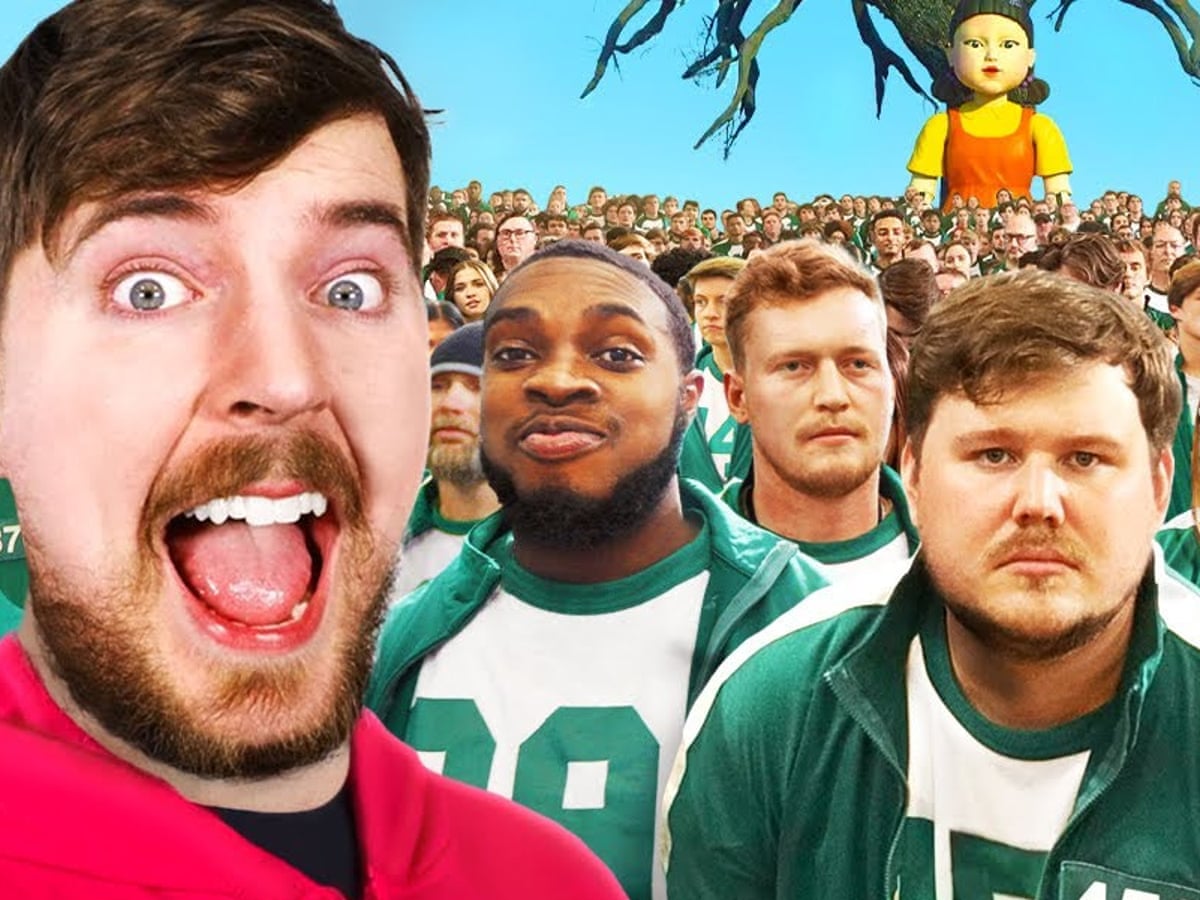
The MrBeast format frequently combines curiosity, competition, emotional stakes, and a clear outcome. A viewer generally knows what is at stake but does not know exactly how the story will unfold. That uncertainty creates a natural reason to keep watching.
His productions also tend to focus on concepts that work across language and cultural boundaries. A competition involving a large prize, a difficult challenge, or an unusual experiment can be understood without extensive background information. This makes the content particularly suitable for an international audience.
The Importance of Storytelling
Large budgets alone cannot guarantee a successful video. A production may contain impressive locations and expensive equipment, but viewers still need a reason to care about the people and outcome. This is where storytelling becomes essential.
A strong challenge usually has a beginning, escalation, setbacks, turning points, and a conclusion. Contestants develop individual goals, unexpected events change the situation, and the final result provides closure. These elements resemble traditional entertainment storytelling, even when the setting is a YouTube video.
For creators studying this approach, the useful lesson is not simply to spend more money. The more practical lesson is to improve the idea itself. A small concept with a clear objective and strong emotional hook can be more compelling than an expensive production without a meaningful story.
Recent Developments and the Next Stage
The current phase of the MrBeast brand shows an increasing movement toward a full-scale entertainment company. In 2026, the creator’s company reported reaching 500 million subscribers on YouTube, while other reporting has described a business structure covering media, food, technology, licensing, and streaming entertainment.
Recent content has also continued to emphasize extremely ambitious challenges. In October 2026, a grocery-store challenge involving a $1 million prize reportedly became another major viewing milestone, illustrating that the creator continues to rely on unusually simple but high-stakes concepts even while his business becomes more sophisticated.
The future of the brand will likely depend on balancing scale with sustainability. Bigger productions can generate enormous attention, but they also require larger teams, higher budgets, stronger safety systems, and more complicated logistics. The ability to maintain audience interest without endlessly increasing production costs will be an important challenge for any creator operating at this level.
Lessons Creators Can Learn From His Career
The journey offers useful lessons even for creators working with much smaller budgets. The most important takeaway is that growth usually comes from understanding an audience rather than simply publishing more frequently. Donaldson spent years experimenting before discovering a format that could consistently attract large audiences.
Another lesson is the importance of iteration. A creator does not need to produce a perfect video on the first attempt. Studying audience behavior, identifying weaknesses, improving thumbnails and titles, refining storytelling, and testing new concepts can gradually create a stronger content strategy.
Perhaps the biggest lesson is to think beyond individual videos. A creator who builds a recognizable identity can eventually develop products, communities, partnerships, services, or other opportunities around that audience. Content becomes the foundation rather than the final destination.
Conclusion
MrBeast’s rise from a teenage YouTube experimenter to a global creator and entrepreneur represents one of the most significant developments in modern digital entertainment. His career illustrates how persistence, experimentation, storytelling, audience understanding, and reinvestment can transform a simple content channel into a large media ecosystem. His success also demonstrates that the creator economy is changing. The most influential creators are no longer limited to advertising revenue or sponsorships. They can build consumer brands, produce streaming shows, organize philanthropic campaigns, and create businesses that operate beyond social media.