
The journey toward a career in the civil services requires patience, discipline, and the ability to learn from setbacks. Every year, thousands of candidates in India prepare for the Union Public Service Commission (UPSC) Civil Services Examination, hoping to contribute to public administration and society. Among the individuals who have attracted attention for their competitive examination journeys is Aashna Chaudhary, whose educational background and UPSC preparation have generated interest among students and government job aspirants.
For many young people, the civil services represent more than a prestigious career. They offer an opportunity to work in administration, participate in policy implementation, and help address challenges affecting communities. Stories about candidates who work toward this goal can encourage others to approach their preparation with greater clarity. However, understanding an individual’s journey also means distinguishing verified biographical information from online speculation and recognizing that every aspirant follows a different path.
This article explores Aashna Chaudhary’s background, education, UPSC journey, the broader challenges of civil services preparation, and the practical lessons students can take from this competitive environment. It also explains how aspiring candidates can develop effective study habits without relying on unrealistic promises or comparing their progress constantly with others.
Early Life and Family Background
Aashna Chaudhary comes from Pilkhuwa in the Hapur district of Uttar Pradesh. Her upbringing and educational experiences helped shape her interest in academic achievement and public service. Her father, Dr. Ajit Singh, is a government college professor, while her mother, Indu Singh, has been described in biographical accounts as a homemaker. A supportive family environment can make a significant difference when a student pursues a demanding goal, especially one that requires years of preparation and the willingness to handle uncertainty.
Her early academic performance reflected a strong commitment to education. Reports about her background state that she scored 96.5 percent in her Class 12 examinations at Delhi Public School, Ghaziabad. Such achievements can demonstrate a student’s ability to work consistently, although school marks alone do not determine success in a competitive examination. The UPSC selection process requires a different combination of knowledge, analytical thinking, awareness of current affairs, written communication, and decision-making skills.
Educational Qualifications and Academic Journey
Education has been an important part of Aashna’s professional development. She pursued a Bachelor of Arts Honours degree in English Literature at Lady Shri Ram College for Women in New Delhi, an institution associated with higher education in the humanities and social sciences. Studying literature can develop skills such as interpreting complex arguments, understanding different perspectives, constructing logical explanations, and expressing ideas clearly. These abilities can be valuable when candidates prepare essays and write analytical answers in competitive examinations.
She subsequently completed a master’s degree in International Relations at South Asian University in New Delhi. This academic field examines relations between countries, international institutions, diplomacy, security, and global political developments. The subject also encourages students to connect historical events with contemporary affairs. Although her university qualifications did not replace the need for dedicated civil services preparation, they provided a foundation for understanding social and political issues. The educational journey of aashna chaudhary illustrates how a background in the humanities and social sciences can complement preparation for a career in public administration.
Aashna Chaudhary UPSC Journey and AIR 116
The Union Public Service Commission Civil Services Examination is a multistage selection process designed to assess candidates for various civil services. It includes the preliminary examination, the main written examination, and the personality test. Each stage measures different abilities, making it necessary for candidates to prepare strategically rather than relying exclusively on memorisation or strong academic performance.
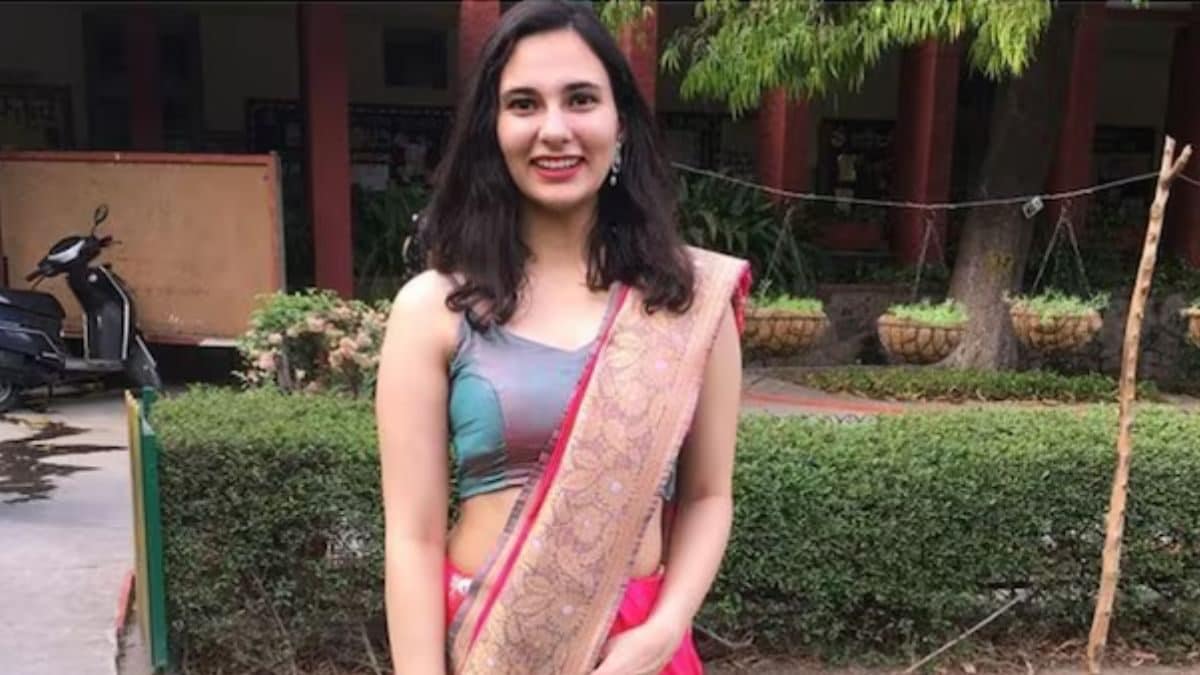
The journey of aashna chaudhary became particularly notable after her success in the 2022 Civil Services Examination. She secured All India Rank 116, earning selection for the Indian Police Service. Her result followed two unsuccessful preliminary examination attempts, commonly reported as occurring in 2020 and 2021. Instead of abandoning her goal, she reassessed her preparation and worked to improve her approach. Her experience offers a useful reminder that an unsuccessful attempt can reveal weaknesses that are difficult to identify during routine studying.
Understanding the Importance of Her Third Attempt
A competitive examination can be emotionally demanding because candidates invest considerable time, energy, and personal expectations in the process. An unsuccessful result may create uncertainty about whether to continue, change the study strategy, or consider another career. The key is to distinguish between a lack of preparation, an ineffective preparation method, and difficulties associated with examination-day performance.
In the case of aashna chaudhary, the two early setbacks were followed by a successful third attempt. Her experience highlights the value of reviewing mistakes and making practical adjustments. Candidates can benefit from analysing mock-test scores, identifying recurring errors, improving revision schedules, and practising questions under timed conditions. Progress becomes easier to measure when preparation is based on evidence rather than the number of hours spent at a desk.
Career Details and Professional Status
Success in the Civil Services Examination marks the beginning of a professional journey rather than its conclusion. Candidates who receive service allocation must undergo the relevant training and learn how to apply their knowledge in practical administrative settings. For an IPS officer, professional responsibilities can involve maintaining public order, supervising police operations, coordinating with other departments, supporting investigations, and responding to local security concerns.
According to the Uttar Pradesh Police officer profile, Aashna Chaudhary belongs to the 2023 IPS recruitment year and is serving as an Assistant Superintendent of Police in Mathura, with the listed posting date of July 26, 2025. Her official service details also record qualifications in English Literature and International Relations. Her career therefore represents a transition from university education and examination preparation to responsibilities within the police administration.
The role of an IPS officer involves much more than passing an examination. Officers must communicate effectively with colleagues and citizens, make decisions under pressure, understand legal procedures, and maintain professional standards. The quality of their work depends on continued learning, sound judgement, teamwork, and accountability. For aspiring candidates, understanding these responsibilities is just as important as learning about examination ranks.
UPSC Preparation Strategy and Study Habits
Preparing for the UPSC examination requires a structured plan that balances conceptual understanding, current affairs, revision, and regular practice. Candidates often begin by studying the official syllabus and examining previous years’ question papers. These resources help them understand which subjects deserve attention and how questions test their knowledge. A clear preparation plan also prevents students from collecting too many books and online materials without developing a reliable revision routine.
The preparation journey associated with aashna chaudhary is frequently discussed in connection with disciplined study, mock examinations, and learning from earlier mistakes. Her experience should not be interpreted as a universal formula for success. Every candidate has different academic strengths, available study time, and learning requirements. Instead, aspirants can use the broader principles of consistency, evaluation, and adaptation to create a strategy suited to their own circumstances.
The Importance of Revision and Practice
Reading a topic once rarely guarantees that a candidate will remember it during an examination. Revision strengthens recall and helps connect related concepts. For example, a student studying the Indian Constitution might first learn fundamental rights, later connect them with important judgments, and then practise questions that require applying those concepts to unfamiliar situations.
Mock tests provide another important benefit by showing how well a student performs under time pressure. Candidates can use their results to identify whether errors arise from incomplete knowledge, confusion between similar options, poor time management, or careless reading. Reviewing incorrect answers is often more productive than simply taking another test without examining the previous one.
A practical study routine may include the following activities:
-
Studying a limited number of reliable resources for each subject.
-
Revising previously covered topics at regular intervals.
-
Solving previous years’ questions and timed mock tests.
-
Following current affairs and connecting them with the syllabus.
-
Practising written answers and evaluating their structure and clarity.
These activities are useful because they turn preparation into a measurable process. Rather than judging progress by study hours alone, candidates can assess whether they understand the syllabus, retain important information, and answer questions accurately.
Quick Facts About Aashna Chaudhary
The following table summarises key publicly reported details about her education and professional career.
| Category | Details |
|---|---|
| Name | Aashna Chaudhary |
| Home region | Pilkhuwa, Hapur, Uttar Pradesh |
| Undergraduate qualification | BA Honours in English Literature |
| Undergraduate institution | Lady Shri Ram College for Women, New Delhi |
| Postgraduate qualification | MA in International Relations |
| Postgraduate institution | South Asian University, New Delhi |
| UPSC examination year | 2022 |
| All India Rank | 116 |
| Civil service | Indian Police Service |
| Recruitment year | 2023 |
| Reported posting | Assistant Superintendent of Police, Mathura |
These details provide a concise overview of her academic and professional milestones. Examination results, recruitment years, and posting information are separate categories, so they should not be confused when researching an officer’s career. Current assignments can also change as part of normal service transfers.
Public Recognition and Social Media Presence
The growing interest in civil service success stories has made social media an important space for sharing preparation experiences. Candidates frequently look for interviews, study routines, subject recommendations, and explanations of examination strategies. Such material can help aspirants learn how successful candidates approached specific challenges, particularly when the advice comes from their own experiences rather than general motivational statements.
Aashna Chaudhary has received public attention following her UPSC result, and her preparation journey has been discussed in educational interviews and media coverage. These discussions can offer useful perspectives on managing setbacks and developing a more effective study method. However, students should distinguish personal experiences from advice that applies to everyone. A particular book list, optional subject, or daily schedule may have worked for one candidate without necessarily being the best choice for another.
Social media also creates a risk of comparison. Carefully edited posts may show achievements and productive study sessions while leaving out ordinary difficulties and uncertainty. Aspirants should use online resources selectively, verify important examination information, and avoid changing their entire strategy every time a new preparation trend becomes popular. The most valuable content is information that can be tested against the syllabus and incorporated into a consistent routine.
Lessons Aspiring Civil Servants Can Learn
One of the most useful lessons from aashna chaudhary’s journey is the importance of treating setbacks as opportunities for improvement. This does not mean that every unsuccessful attempt automatically leads to success. Improvement requires honest evaluation, realistic planning, and a willingness to change ineffective habits. A student who repeatedly struggles with preliminary examinations may need to improve conceptual clarity or question-solving accuracy, while someone who struggles in the main examination may need more answer-writing practice.
Another lesson is the importance of building a sustainable routine. Preparing for a competitive examination over an extended period can be mentally tiring, particularly when candidates feel pressure to study for extremely long hours. A realistic schedule should include adequate sleep, breaks, revision, and time to review progress. Consistency over several months is generally more useful than an intense schedule that becomes impossible to maintain.
Candidates should also understand that civil services preparation is not solely about memorising facts. Officers work with people, institutions, laws, and complex social problems. Reading widely, considering different viewpoints, communicating clearly, and developing ethical judgement can help students prepare for the broader demands of public service.
Challenges of UPSC Preparation in India
The UPSC examination attracts candidates from diverse educational, economic, and regional backgrounds. Some prepare while attending university, others work alongside their studies, and many dedicate themselves to full-time preparation. These different circumstances mean that candidates do not all have equal access to coaching, study materials, quiet study spaces, or financial support.
Aspirants can make preparation more manageable by setting weekly goals instead of focusing only on the distant final result. For instance, completing a defined portion of the polity syllabus, revising it twice, and solving a set of practice questions creates a clear target. Small, measurable objectives also help candidates identify delays before they become major problems.
Another challenge is information overload. The availability of online lectures, current-affairs summaries, coaching notes, and multiple test series can create the impression that more resources always produce better results. In practice, repeatedly revising a manageable set of reliable materials may be more effective than constantly switching between sources. Students should prioritise official notifications for examination rules and eligibility requirements, since these details can change over time.
Conclusion
Aashna Chaudhary’s journey from academic study to selection for the Indian Police Service offers an informative example of persistence, preparation, and professional ambition. Her educational qualifications, two unsuccessful preliminary examination attempts, eventual All India Rank 116 in the 2022 Civil Services Examination, and subsequent police service illustrate the different stages involved in pursuing a demanding career.
For aspiring civil servants, the most valuable lesson is not simply to admire a successful result but to understand the habits that make long-term improvement possible. Careful planning, regular revision, honest assessment, and resilience can help candidates approach their own goals more effectively. At the same time, every aspirant should build a strategy that reflects their personal strengths and circumstances.
Ultimately, aashna chaudhary’s story is a reminder that a competitive examination is both an academic challenge and a test of adaptability. Success requires more than ambition: it calls for informed decisions, consistent effort, and a willingness to learn throughout the journey.