
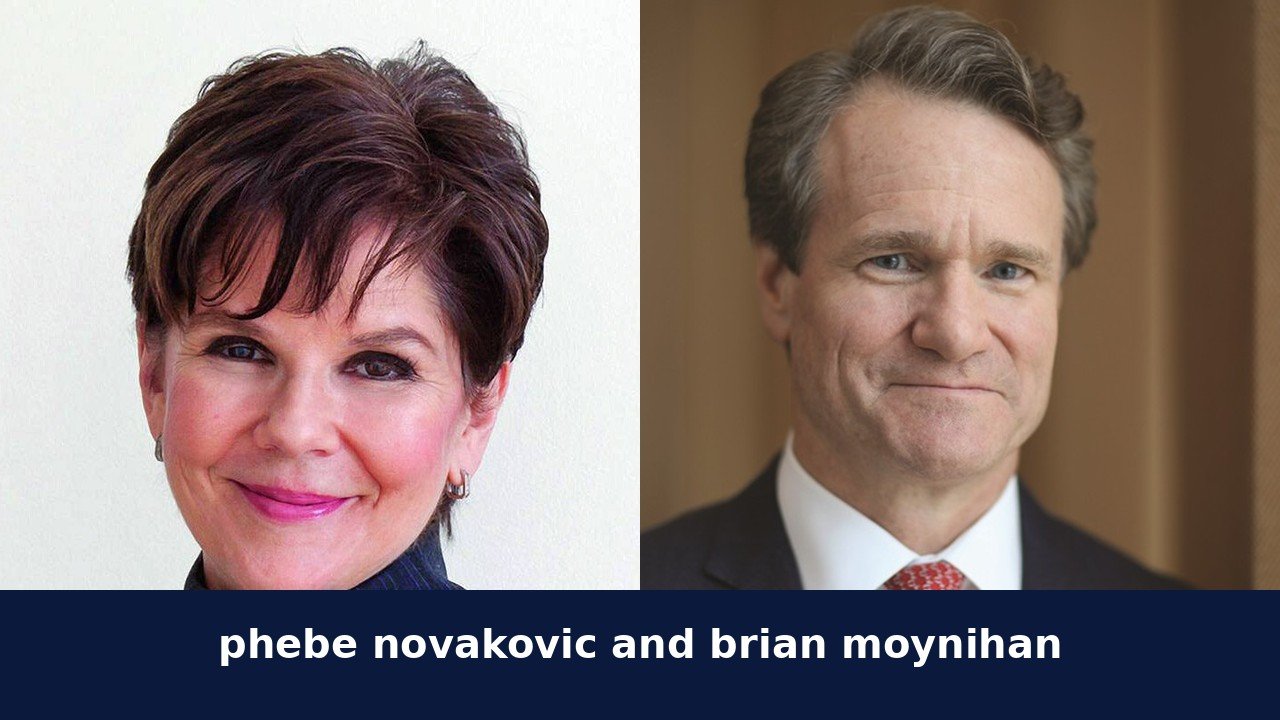
The corporate world is shaped by leaders who can navigate uncertainty, make difficult decisions, and guide large organizations through periods of transformation. Phebe Novakovic and Brian Moynihan represent two influential examples of executive leadership in American business. Novakovic is widely recognized for her role at General Dynamics, a major aerospace and defense company, while Moynihan leads Bank of America, one of the largest financial institutions in the United States. Although they operate in different industries, their careers offer valuable insights into strategic planning, organizational discipline, and the responsibilities that accompany leadership at the highest level.
Interest in phebe novakovic and brian moynihan also reflects a broader curiosity about how executives manage complex organizations in an environment shaped by technological change, economic uncertainty, regulation, and evolving customer expectations. Defense companies must balance innovation, government contracts, manufacturing capabilities, and national security priorities. Banking leaders, meanwhile, must respond to interest-rate movements, digital transformation, cybersecurity risks, and changing financial needs. Examining these executives together provides a useful perspective on how leadership principles can remain relevant even when industries have very different objectives.
Who Is Phebe Novakovic?
Phebe Novakovic is an American business executive best known for serving as chairwoman and chief executive officer of General Dynamics. The company operates across several important business areas, including aerospace, marine systems, combat systems, and technologies supporting government and defense customers. Its products and services serve demanding markets in which reliability, engineering expertise, long-term investment, and operational execution are essential. Novakovic’s leadership has therefore involved overseeing a business with substantial technical complexity and significant responsibilities to customers and public institutions.
Her professional background includes experience in government service before she moved into corporate leadership. This experience helped shape her understanding of public-sector decision-making, national security priorities, and the relationship between government requirements and industrial capabilities. At General Dynamics, leadership requires balancing near-term financial performance with investments that may take years to produce results. Large defense programs often involve extended development schedules, strict performance standards, and complicated supply chains. Novakovic’s role illustrates how executives must coordinate engineering, production, financial planning, and workforce development while maintaining accountability for the company’s overall direction.
Who Is Brian Moynihan?
Brian Moynihan is an American banking executive who serves as chairman and chief executive officer of Bank of America. His career has been closely associated with the development of a large financial institution serving individual customers, small businesses, corporations, institutional investors, and other organizations. Banking leadership requires an understanding of financial markets, lending, deposits, risk management, regulatory expectations, and customer relationships. These responsibilities make the chief executive’s role particularly important during periods of economic volatility.
Moynihan became CEO in 2010, following a period of significant disruption in the global financial system. The years surrounding the financial crisis created challenges for major banks, including questions about risk controls, capital strength, public trust, and sustainable profitability. Under his leadership, Bank of America has focused on simplifying operations, managing expenses, strengthening its balance sheet, expanding digital services, and maintaining relationships across different customer segments. His career demonstrates how executive leadership can involve both responding to immediate pressures and rebuilding organizational practices for long-term stability.
Phebe Novakovic and Brian Moynihan: Two Different Leadership Paths
The professional journeys of phebe novakovic and brian moynihan offer a useful comparison because both executives oversee organizations where mistakes can carry consequences far beyond a single business transaction. General Dynamics operates in sectors that support defense capabilities, aerospace development, and government missions. Bank of America participates in the financial system that enables households to manage money, businesses to obtain credit, and companies to conduct transactions. Each organization must preserve confidence among customers, employees, investors, regulators, and other stakeholders.
Despite these shared responsibilities, their leadership priorities differ. Novakovic must consider production schedules, contract execution, engineering performance, and the long-term demands of defense and aerospace customers. Moynihan must focus on credit quality, liquidity, capital allocation, customer service, financial regulation, and the changing economics of banking. The comparison shows that leadership is not a single formula. Effective executives adapt their decisions to the risks, operating models, and expectations of their respective industries while maintaining a clear sense of organizational purpose.
| Leadership factor | Phebe Novakovic | Brian Moynihan |
|---|---|---|
| Organization | General Dynamics | Bank of America |
| Industry | Aerospace and defense | Banking and financial services |
| Primary responsibilities | Operational execution, engineering, contracts, and long-term programs | Financial stability, customer relationships, risk management, and digital banking |
| Major external considerations | Government priorities, procurement, technology, and supply chains | Interest rates, regulation, credit conditions, and financial markets |
| Long-term leadership focus | Industrial capability and dependable program delivery | Sustainable financial performance and customer-focused services |
Leadership Philosophy and Decision-Making
Executive leadership becomes particularly visible when organizations must make decisions without having complete information. Both Novakovic and Moynihan work in environments where managers must evaluate risks, allocate limited resources, and make plans that remain effective under changing conditions. A decision involving a major defense program can affect years of production and investment, while a banking decision about lending standards can influence financial performance and customer access to credit. In both cases, leaders need reliable information, strong internal controls, and the ability to distinguish between temporary challenges and structural problems.
Their positions also demonstrate the importance of accountability. Senior executives cannot personally supervise every operational detail within organizations of this scale. Instead, they must establish clear expectations, build capable management teams, monitor performance, and ensure that important information reaches decision-makers. A strong leadership system allows employees to understand priorities while giving managers enough flexibility to solve problems. This combination of discipline and delegation is essential for organizations that operate across numerous locations, business units, and customer groups.
Strategic Planning at General Dynamics
General Dynamics operates in markets where planning horizons can extend well beyond ordinary annual business cycles. Aircraft development, shipbuilding, defense equipment production, and advanced technology programs often require substantial capital, specialized labor, complex testing, and coordination with suppliers. These activities cannot be managed effectively through short-term financial targets alone. Company leadership must consider expected demand, contractual obligations, production capacity, technical risks, and the availability of skilled employees.
Novakovic’s position places her at the center of these decisions. Strategic planning in the defense sector involves determining which capabilities deserve investment, how resources should be distributed among business units, and how the company can fulfill demanding customer requirements. For example, a delay in obtaining a specialized component may affect a production schedule even when the broader program remains financially sound. Such challenges require coordination between procurement teams, engineers, production managers, and customers. Successful execution depends on anticipating bottlenecks, maintaining quality standards, and communicating realistically about schedules and costs.
Another important consideration is the relationship between innovation and reliability. Defense and aerospace customers require advanced capabilities, but those capabilities must also perform consistently under demanding conditions. Introducing new technology without sufficient testing can create operational and financial risks. Conversely, delaying innovation for too long may reduce competitiveness. The leadership challenge is to support technological progress while preserving the standards, expertise, and processes that customers depend on.
Strategic Planning at Bank of America
Bank of America’s strategy operates within a different set of economic and regulatory conditions. Banks must balance profitability with financial resilience, customer service, responsible lending, and compliance obligations. Their results are influenced by interest rates, consumer spending, business investment, loan repayment patterns, and broader market conditions. This means leadership must continually evaluate how external developments could affect deposits, credit demand, expenses, and revenue.
Moynihan’s leadership has emphasized operational efficiency, financial discipline, and the use of technology to improve customer experiences. Digital banking has become especially important as customers increasingly expect to check balances, transfer money, deposit checks, and manage accounts through mobile devices. These services can make banking more convenient, but they also require substantial investment in cybersecurity, system reliability, fraud prevention, and data protection. Technology therefore creates opportunities while introducing risks that must be managed carefully.
Consider a customer who needs to transfer money quickly or a small business that depends on timely payments to meet payroll. A reliable digital banking system can make these everyday activities easier. However, an outage, security breach, or fraudulent transaction can damage confidence. Senior leadership must consequently balance innovation with operational resilience, ensuring that convenience does not come at the expense of security or reliability.
How Their Industries Shape Their Leadership Responsibilities
The defense and banking industries share a need for strong governance, but their operating environments produce different challenges. Defense businesses often depend on government procurement decisions, multiyear contracts, specialized manufacturing facilities, and long development schedules. Banks operate in a more immediate financial environment in which market conditions, deposit movements, customer behavior, and credit risks can change rapidly. The distinction influences how executives evaluate performance and prepare for uncertainty.
For Novakovic, maintaining industrial capacity and fulfilling complex contracts are central concerns. For Moynihan, protecting financial stability while serving customers and managing risk is fundamental. Yet both leaders must look beyond quarterly results. An organization that cuts essential investment simply to improve short-term earnings may weaken its future capabilities. Similarly, a bank that pursues growth without adequate risk controls may expose itself to losses that outweigh immediate gains. Strategic leadership involves understanding which investments support lasting performance and which risks could undermine it.
The Importance of Risk Management and Corporate Governance
Risk management is a central responsibility for any executive overseeing a large, complex organization. At General Dynamics, risks can involve manufacturing quality, supply-chain interruptions, project schedules, regulatory compliance, cybersecurity, and changes in government requirements. Effective governance requires processes for identifying problems early, assigning responsibility, tracking corrective actions, and ensuring that operational decisions meet contractual and legal standards.
At Bank of America, risk management includes credit exposure, market volatility, fraud, financial crime, technology disruptions, and regulatory compliance. Banking institutions must maintain appropriate safeguards because their activities affect customers and the wider financial system. Lending decisions, for example, must account for a borrower’s ability to repay while recognizing that economic conditions can change. Strong internal controls and consistent oversight help institutions remain prepared for unexpected developments.
For both organizations, governance is not simply a matter of satisfying formal requirements. It supports informed decision-making and helps employees understand the boundaries within which they operate. Clear reporting structures, independent oversight, and a culture that encourages the timely escalation of concerns can reduce the likelihood that small problems become major failures.
Technology, Innovation, and the Future of Business Leadership
Technological change continues to influence the responsibilities of executives across industries. Defense companies are investing in advanced digital systems, engineering tools, communications capabilities, and technologies that can improve performance and efficiency. Financial institutions are using automation, data analytics, artificial intelligence, and mobile platforms to support customer service and streamline internal operations. These developments create opportunities for productivity, but they also require careful evaluation of security, cost, reliability, and workforce needs.
The experiences associated with phebe novakovic and brian moynihan illustrate why technology strategy must be connected to broader business objectives. An advanced system is valuable only when it addresses a real operational need, performs reliably, and can be integrated into existing processes. In manufacturing, that might mean improving quality control or reducing delays. In banking, it might mean detecting suspicious transactions or making routine services easier to access. Leaders must evaluate the expected benefits without overlooking implementation costs and potential vulnerabilities.
Workforce development is equally important. New systems change the skills employees need and can alter how teams collaborate. Organizations that invest in training, clear communication, and practical implementation are better positioned to benefit from innovation. Technology should strengthen human judgment and operational capabilities rather than become a substitute for appropriate oversight.
Public Trust and Corporate Responsibility
Large companies influence communities, employees, customers, suppliers, and the broader economy. Their leaders are therefore judged not only by financial results but also by the way their organizations manage responsibilities. Defense companies must maintain high standards of product quality, legal compliance, workplace safety, and responsible use of resources. Banks must protect customer information, treat customers fairly, manage financial risks, and maintain confidence in the services they provide.
Public trust can be difficult to build and easy to damage. A company may deliver strong financial results but still face criticism if customers or employees believe it has ignored important responsibilities. Similarly, operational success can be undermined by poor communication or insufficient attention to stakeholder concerns. Executives must therefore consider how decisions affect different groups and how those decisions are explained.
For General Dynamics and Bank of America, responsibility also involves maintaining the systems that customers and institutions depend on. Reliable products, secure financial services, ethical conduct, and transparent governance all contribute to organizational credibility. Although the precise expectations differ between industries, the underlying principle remains consistent: long-term success depends on more than immediate financial performance.
What Business Professionals Can Learn From Their Careers
The careers of Novakovic and Moynihan offer practical lessons for managers, entrepreneurs, and aspiring executives. Their roles demonstrate the importance of understanding an organization’s operating model before making strategic decisions. Leaders need to know which activities create value, which risks could interrupt performance, and which capabilities require sustained investment. They must also understand how their industries are affected by regulation, technology, customer expectations, and economic developments.
Several principles can be applied across different professional settings:
- Think long term: Build plans that support sustainable performance rather than relying exclusively on immediate results.
- Manage risk proactively: Identify weaknesses early and create clear processes for addressing them.
- Invest in people and systems: Technology and strategy work best when employees have the skills and resources to implement them.
- Measure performance carefully: Use relevant information to evaluate results, identify problems, and improve decisions.
These principles apply to organizations of many sizes. A small business may not face the same contractual or regulatory requirements as a major defense company or international bank, but it still benefits from financial discipline, clear responsibilities, dependable systems, and thoughtful planning. The scale changes, while the fundamentals of effective management remain recognizable.
Conclusion
Phebe Novakovic and Brian Moynihan offer two distinct perspectives on leadership at the highest level of American business. Novakovic’s work at General Dynamics reflects the demands of aerospace and defense, where technical expertise, long-term planning, production discipline, and dependable execution are essential. Moynihan’s leadership at Bank of America reflects the complexity of financial services, where risk management, customer relationships, digital innovation, and financial resilience shape strategic decisions.
The broader significance of phebe novakovic and brian moynihan lies in the lessons their careers provide about adapting leadership to different environments. Neither industry can succeed through ambition alone. Both require careful resource allocation, capable teams, responsible governance, and the ability to respond to change without losing sight of long-term objectives. For readers interested in business strategy and executive management, their careers demonstrate that sustainable leadership depends on combining clear priorities with disciplined execution, continuous learning, and accountability to the people and institutions an organization serves.