
Facial beauty has been discussed, studied, and interpreted in different ways throughout history. While personal preferences and cultural standards influence how people perceive attractiveness, mathematical proportions have also attracted considerable attention. One concept that frequently appears in conversations about facial aesthetics is the golden ratio. This mathematical principle is associated with balance, harmony, and pleasing proportions, making it an interesting subject for people who want to understand their facial features.
A golden ratio face calculator is a digital tool designed to examine facial measurements and compare selected proportions with the mathematical value of the golden ratio, approximately 1.618. Depending on the tool, users may upload a photograph or enter specific facial measurements to receive an analysis. The results can provide an interesting perspective on facial structure, including relationships between the forehead, eyes, nose, lips, chin, and overall face length.
However, mathematical measurements do not determine whether someone is beautiful. Human faces naturally differ in shape, structure, and proportions. Understanding how these calculators work can help users interpret their results realistically instead of treating a numerical score as a universal beauty standard.
What Is the Golden Ratio in Facial Aesthetics?
The golden ratio is a mathematical relationship commonly represented by the Greek letter phi (φ). Its approximate value is 1.618, and it describes a relationship in which the ratio of a larger measurement to a smaller measurement is approximately equal to the ratio of their combined length to the larger measurement.
This mathematical concept appears in geometry, architecture, art, and certain natural patterns. Throughout history, artists and designers have explored the golden ratio as a possible guide for creating visually balanced compositions. Its connection with facial aesthetics comes from attempts to identify proportional relationships between different facial features.
In facial analysis, the concept is sometimes applied to measurements such as face length, face width, nose length, mouth width, and distances between the eyes. For example, an analysis might compare the vertical length of a face with its width. Other comparisons may examine the relationship between the nose and mouth or the distance between particular facial landmarks.
It is important to understand that there is no universally accepted golden ratio that every attractive face must follow. The mathematical principle offers one way to study proportions, but attractiveness involves many additional factors, including expression, individuality, skin appearance, and cultural preferences.
How Does a Golden Ratio Face Calculator Work?
A golden ratio face calculator generally uses facial measurements to examine relationships between different parts of the face. Some online tools allow users to upload a front-facing photograph, while others require manual measurements. More advanced systems may use artificial intelligence or facial landmark detection to identify important points automatically.
When a photograph is uploaded, the software may identify landmarks around the eyes, eyebrows, nose, lips, jawline, chin, and forehead. It then measures distances between selected points and compares those measurements with predefined proportions. Based on the calculations, the tool may display ratios, visual guides, or an overall compatibility score.
For example, imagine a person whose measured facial length is 18 centimeters and whose facial width is 11 centimeters. Dividing the length by the width produces a ratio of approximately 1.64. Since this value is relatively close to 1.618, the calculator might describe that particular measurement as close to the golden ratio.
However, this comparison does not establish that the person’s entire face follows the golden ratio. Different facial measurements may produce different results, and the calculator’s conclusions depend heavily on the landmarks and formulas used.
The Role of Facial Landmark Detection
Facial landmark detection is an important technology behind many modern face-analysis applications. It identifies specific locations on a face and uses their positions to estimate measurements. These points may include the corners of the eyes, the tip of the nose, the edges of the lips, and the outline of the jaw.
Computer vision systems can process these points to calculate distances and examine facial proportions. Some applications also use machine learning to improve landmark recognition across different facial appearances. Nevertheless, results can become less reliable when photographs contain shadows, unusual camera angles, facial expressions, or poor lighting.
Which Facial Measurements Are Commonly Analyzed?
Facial analysis involves several measurements rather than a single comparison. Different calculators may use different methods, so the measurements included in one tool might not appear in another. Understanding these measurements makes it easier to interpret the results and recognize the limitations of automated analysis.
1. Overall Face Length and Width
One commonly examined relationship is the proportion between the vertical length and horizontal width of the face. Face length is generally measured from the upper forehead or hairline region to the bottom of the chin, depending on the calculator’s method. Width is often measured across the cheekbone area.
This comparison provides a basic indication of facial shape. A longer face may produce a higher length-to-width ratio, while a broader face may produce a lower ratio. However, natural facial shapes vary significantly, and there is no requirement for everyone to have identical measurements.
2. Eye Distance and Eye Proportions
The eyes play an important role in how facial balance is perceived. Some facial analysis systems examine the distance between the eyes, the width of each eye, and the relationship between the eyes and the overall face width.
These measurements can help describe the positioning of facial features. However, differences in eye spacing are natural and contribute to individual appearance. A calculator should not treat one specific eye arrangement as the only desirable structure.
3. Nose Length and Width
Nose measurements are another common part of facial proportion analysis. A tool may estimate the length from the area between the eyebrows to the tip of the nose or examine the width between the nostrils.
The relationship between nose dimensions and surrounding features can influence the overall visual balance of a face. Nevertheless, nose shapes differ considerably among individuals, and a mathematical comparison cannot determine whether a particular nose is attractive.
4. Lip Width and Chin Position
Some calculators also examine the width of the mouth in relation to the nose and the lower facial region. Chin position and jawline proportions may be included to understand the structure of the lower face.
These measurements can help describe facial geometry, especially when evaluating the relationship between the upper, middle, and lower sections of the face.
Understanding Common Golden Ratio Measurements
The following table explains several measurements that may appear in facial proportion analysis. These are examples of commonly discussed comparisons rather than universal medical or scientific standards.
| Facial measurement | What it examines | Why it matters |
|---|---|---|
| Face length to width | Overall facial proportions | Describes face shape |
| Eye spacing | Distance between the eyes | Examines eye positioning |
| Nose width | Width across the nostrils | Describes nose proportions |
| Mouth width | Distance between lip corners | Examines lower-face balance |
| Facial thirds | Forehead, middle, and lower face | Compares vertical proportions |
| Jawline width | Width around the lower face | Describes facial structure |
These measurements provide a simplified overview of facial geometry. Different tools may use different landmark definitions, so comparing results from multiple calculators can produce inconsistent outcomes.
How to Use a Golden Ratio Face Calculator
Using an online facial proportion tool is generally straightforward. Most applications are designed for beginners and do not require previous knowledge of mathematics or facial anatomy. However, preparing a suitable photograph can improve the consistency of the analysis.
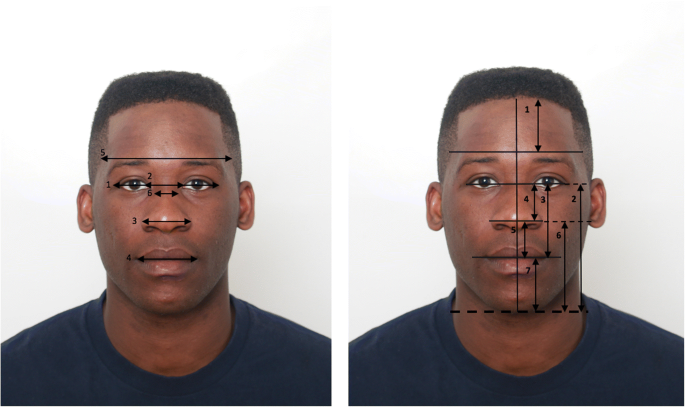
Start by choosing a calculator that clearly explains its measurement method and privacy practices. If the tool supports photo uploads, use a recent, front-facing image with your face clearly visible. Avoid photographs with heavy filters, strong shadows, or significant camera distortion.
Once the image is uploaded, the application may automatically identify facial landmarks. Some tools allow users to adjust these points manually if the software places them incorrectly. After processing, the results may display measurements, proportional comparisons, or a numerical score.
For a more consistent experience, follow these basic guidelines:
-
Use a clear photograph with natural, balanced lighting.
-
Keep your head straight and face the camera directly.
-
Avoid beauty filters and image-editing effects.
-
Keep your hair away from important facial landmarks.
-
Read the calculator’s explanation before interpreting its score.
After receiving the results, focus on understanding the measurements instead of comparing yourself with an idealized facial template. A calculator is most useful as an educational tool for exploring proportions.
What Does a Golden Ratio Face Score Mean?
Many facial analysis applications present their findings through percentages, numerical scores, or visual comparisons. These results are usually intended to show how closely selected facial measurements match the mathematical relationships programmed into the software.
For example, a tool might provide a percentage indicating how closely certain measurements correspond to its preferred ratios. A higher percentage may suggest that the selected measurements are closer to the calculator’s mathematical reference points.
However, the score should not be interpreted as a measurement of personal attractiveness, social value, or physical perfection. There is no universally recognized scientific scoring system that can accurately rank every human face using the golden ratio.
Two calculators can also produce different scores for the same photograph because their measurement systems, facial landmarks, and scoring formulas may differ. Therefore, it is better to treat the results as approximate mathematical observations rather than definitive judgments.
Golden Ratio vs. Facial Symmetry: Understanding the Difference
Facial symmetry and the golden ratio are related topics in discussions about facial aesthetics, but they describe different concepts. Symmetry refers to how closely corresponding features on the left and right sides of the face resemble each other. The golden ratio, on the other hand, describes a mathematical relationship between selected measurements.
A symmetrical face does not necessarily follow the golden ratio. Similarly, a face with measurements close to 1.618 may still contain noticeable differences between its two sides. Both concepts provide different ways to examine facial structure.
Perfect symmetry is also uncommon in natural human faces. Minor differences in eyebrow height, eye position, cheek shape, or jaw structure are normal. These variations contribute to individual identity and make faces look natural rather than artificially uniform.
When using a golden ratio face calculator, it is useful to remember that proportional harmony and bilateral symmetry should not be treated as interchangeable measurements.
Can the Golden Ratio Really Determine Facial Beauty?
The relationship between mathematical proportions and human attractiveness is more complicated than a simple formula. Although some researchers have explored facial symmetry, proportions, and perceived attractiveness, there is no established scientific consensus that the golden ratio alone determines whether someone has an attractive face.
Human perception is influenced by several interacting factors. Facial expression, skin appearance, age, cultural background, familiarity, personality, and individual preferences can all influence how people respond to different faces. What one person finds attractive may not appeal to someone else.
Additionally, beauty standards change across generations and cultures. Facial features that are celebrated in one community may be viewed differently elsewhere. This diversity makes it difficult to create a universal mathematical formula for attractiveness.
The golden ratio remains an interesting mathematical reference, but it should not be considered a scientifically proven beauty test. A calculator can explain selected proportions, not the complete experience of human appearance.
Benefits of Using a Golden Ratio Calculator
Although these tools have limitations, they can still provide useful information for people interested in mathematics, photography, design, and facial geometry. They make abstract proportional concepts easier to understand by applying them to visible facial measurements.
One benefit is educational value. Users can explore how ratios work and learn how different measurements relate to one another. This can also introduce beginners to mathematical concepts such as division, proportion, and geometric relationships.
Another advantage is convenience. Instead of measuring every facial feature manually, an automated application may identify landmarks and calculate selected distances within seconds. The results can help users understand the geometry of their faces without specialized equipment.
These calculators may also be useful in photography and digital design. Understanding facial proportions can help photographers explore composition, camera positioning, and portrait framing. Designers working on digital avatars or character illustrations may also use proportional measurements as general references.
Limitations You Should Know Before Uploading a Photo
A facial proportion calculator is only as reliable as its input photograph and measurement system. Camera positioning is one of the biggest factors affecting results. A photograph taken from slightly above or below eye level can change the apparent relationship between the forehead, nose, chin, and jawline.
Lens distortion can also influence facial appearance. Smartphone cameras used at very close distances may make central features appear larger relative to the outer parts of the face. This can affect the measurements generated by automated applications.
Another limitation involves differences in facial landmark detection. Software may struggle to identify exact facial boundaries when hair covers the forehead, glasses hide parts of the eyes, or lighting creates strong shadows. Even small landmark placement errors can change the resulting ratios.
Privacy is another important consideration. Facial photographs contain personal biometric information. Before uploading an image, users should check whether the application stores photographs, shares data with third parties, or uses submitted images for model training. Choosing a service with transparent privacy policies is a sensible precaution.
How to Interpret Your Results in a Healthy Way
The best way to use facial proportion analysis is to approach it with curiosity rather than self-judgment. A numerical result can be interesting, but it should never become the primary measure of confidence or self-image.
If a calculator indicates that certain measurements differ from its reference ratio, it does not mean that something is wrong with your appearance. It simply means that your facial structure has different proportions from the mathematical pattern selected by that particular application.
It is also worth remembering that facial features work together. The overall appearance of a face cannot be reduced to isolated measurements of the eyes, nose, lips, or chin. Natural expressions, facial movement, and individual characteristics create an appearance that numerical analysis cannot fully represent.
Instead of chasing a particular score, use the experience to understand facial geometry and appreciate the diversity of natural facial structures.
Conclusion
A golden ratio face calculator offers an interesting way to explore the mathematics behind facial proportions. By examining measurements such as face length, width, eye spacing, nose dimensions, and mouth positioning, these digital tools make the concept of the golden ratio easier to understand. Modern facial landmark detection and image-processing technologies have also made this type of analysis more accessible.
However, mathematical proportions should never be confused with a universal definition of beauty. Every face has its own structure, characteristics, and natural variations. Symmetry, proportions, expression, and personal preferences all contribute to how appearance is perceived.
Ultimately, the most valuable purpose of these calculators is education and exploration. They can help users understand facial geometry, but they cannot measure individuality, confidence, or personal beauty. Use the results as an interesting reference, appreciate your natural features, and remember that no mathematical formula defines what makes a person attractive.